Protecting Critical Structures Against Hydrocarbon Pool Fire Risks
NEVIQ INFRATECH provides specialized passive fireproofing solutions for hydrocarbon pool fire protection, helping protect structural steel, process equipment, and critical assets in high-risk industrial environments.
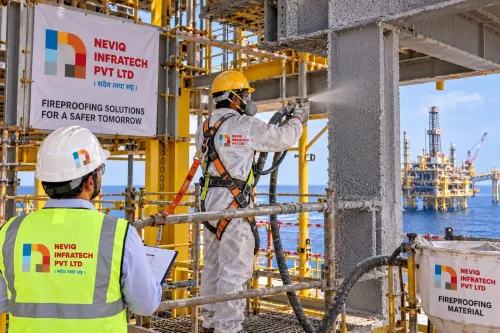
Hydrocarbon fires can generate extremely high temperatures and rapidly compromise the structural integrity of steel and other critical components. Passive fire protection systems create a protective barrier that limits heat transfer and helps maintain the required fire resistance of protected assets during a fire.
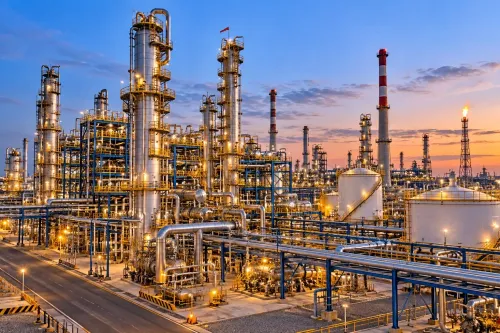
Our solutions are designed for demanding applications across oil & gas, petrochemical, chemical, refinery, LNG, power, and industrial facilities.
What Is Hydrocarbon Pool Fire?
A hydrocarbon pool fire occurs when a flammable hydrocarbon liquid is released and accumulates on a surface before igniting. Examples include releases of crude oil, gasoline, diesel, kerosene, solvents, and other hydrocarbon-based products.
Compared with conventional cellulosic fires, hydrocarbon pool fires develop much more rapidly and expose structures to significantly higher heat flux and temperatures. This makes appropriate passive fire protection essential for critical structures and equipment.
Passive Fireproofing for Hydrocarbon Pool Fire Protection
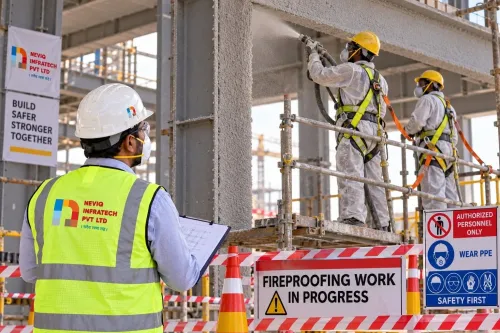
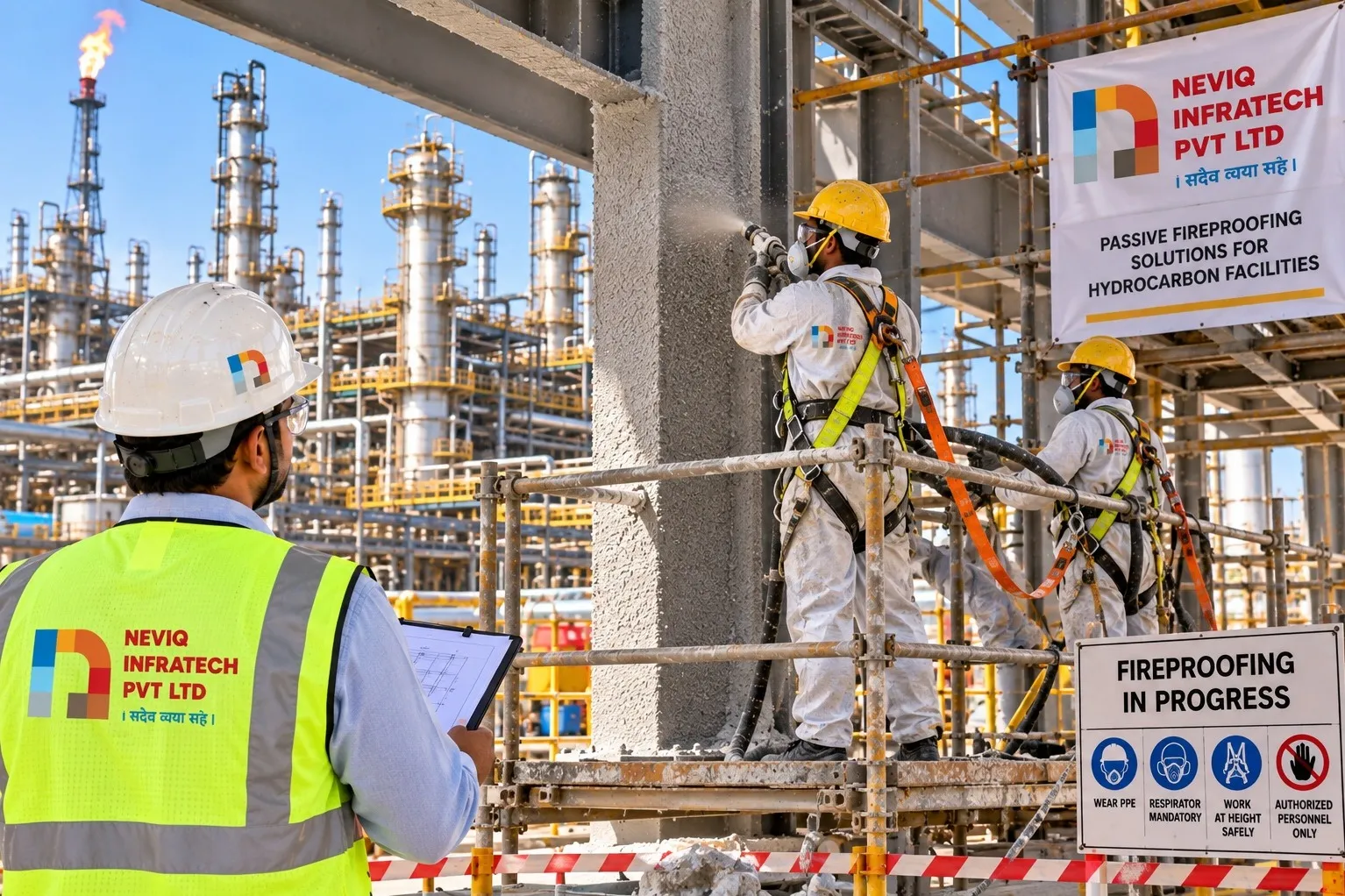
Passive fireproofing is a fire protection method that does not require active intervention, mechanical operation, or electrical activation to provide protection.
For hydrocarbon pool fire scenarios, an appropriate passive fireproofing system can:
- Protect structural steel from rapid temperature rise
- Maintain the load-bearing capacity of steel during fire exposure
- Provide specified fire resistance for critical structures
- Reduce the risk of progressive structural failure
- Protect critical process and support facilities
- Support safer emergency response and shutdown operations
- Help improve overall asset and personnel protection
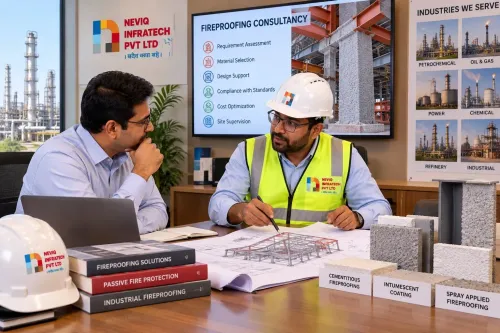
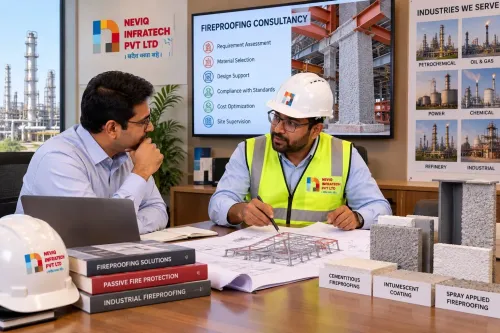
At NEVIQ INFRATECH, we focus on selecting and applying fireproofing systems according to project requirements, exposure conditions, substrate, required fire resistance, and applicable specifications.
Passive Fireproofing Systems
Depending on project requirements, passive fireproofing may include different types of fire-resistant systems and materials.
The selection of a suitable system depends on factors such as:
- Hydrocarbon fire scenario
- Required fire resistance period
- Design temperature and heat exposure
- Steel section factor
- Environmental conditions
- Indoor or outdoor installation
- Corrosion protection requirements
- Mechanical and impact exposure
- Compatibility with existing coatings
- Project specifications and applicable standards
NEVIQ INFRATECH can support clients in determining an appropriate passive fireproofing approach based on the specific project environment and protection requirements.
Why Choose NEVIQ INFRATECH?
NEVIQ INFRATECH delivers passive fire protection solutions with a focus on industrial safety, application quality, project compliance, and long-term asset protection.
Our capabilities are suited to demanding industrial environments where reliable fire protection is critical to maintaining structural integrity and minimizing the consequences of a fire event.
We work with clients, EPC contractors, engineering teams, and industrial operators to deliver passive fireproofing solutions aligned with project-specific requirements.
Protect Your Critical Assets Against Hydrocarbon Fire
Effective passive fire protection is an important part of protecting people, structures, equipment, and business-critical operations in high-hazard industrial facilities.
NEVIQ INFRATECH provides professional passive fireproofing solutions for hydrocarbon pool fire protection, supporting industrial projects with reliable fire protection systems and quality-focused application.
Contact NEVIQ INFRATECH to discuss your hydrocarbon fireproofing requirements, project specifications, and passive fire protection needs.
Keywords