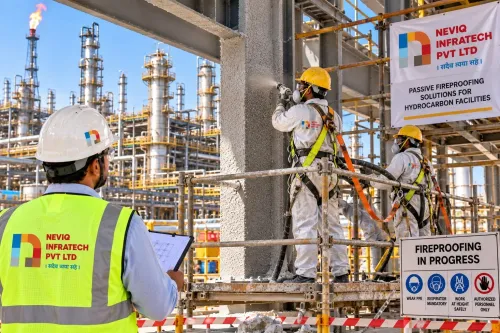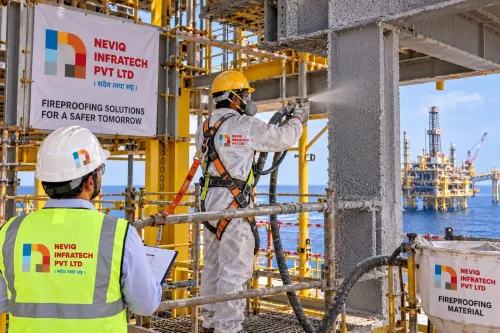
Protecting critical assets from extreme hydrocarbon fire exposure with reliable passive fireproofing solutions.
Hydrocarbon jet fires can occur when pressurized flammable gases or liquids are released through a small opening and ignite, creating an intense, high-velocity flame. In oil & gas, petrochemical, LNG, refining, and other high-risk industrial facilities, such fire scenarios can rapidly expose structural steel, equipment supports, pipelines, and other critical assets to extreme heat.
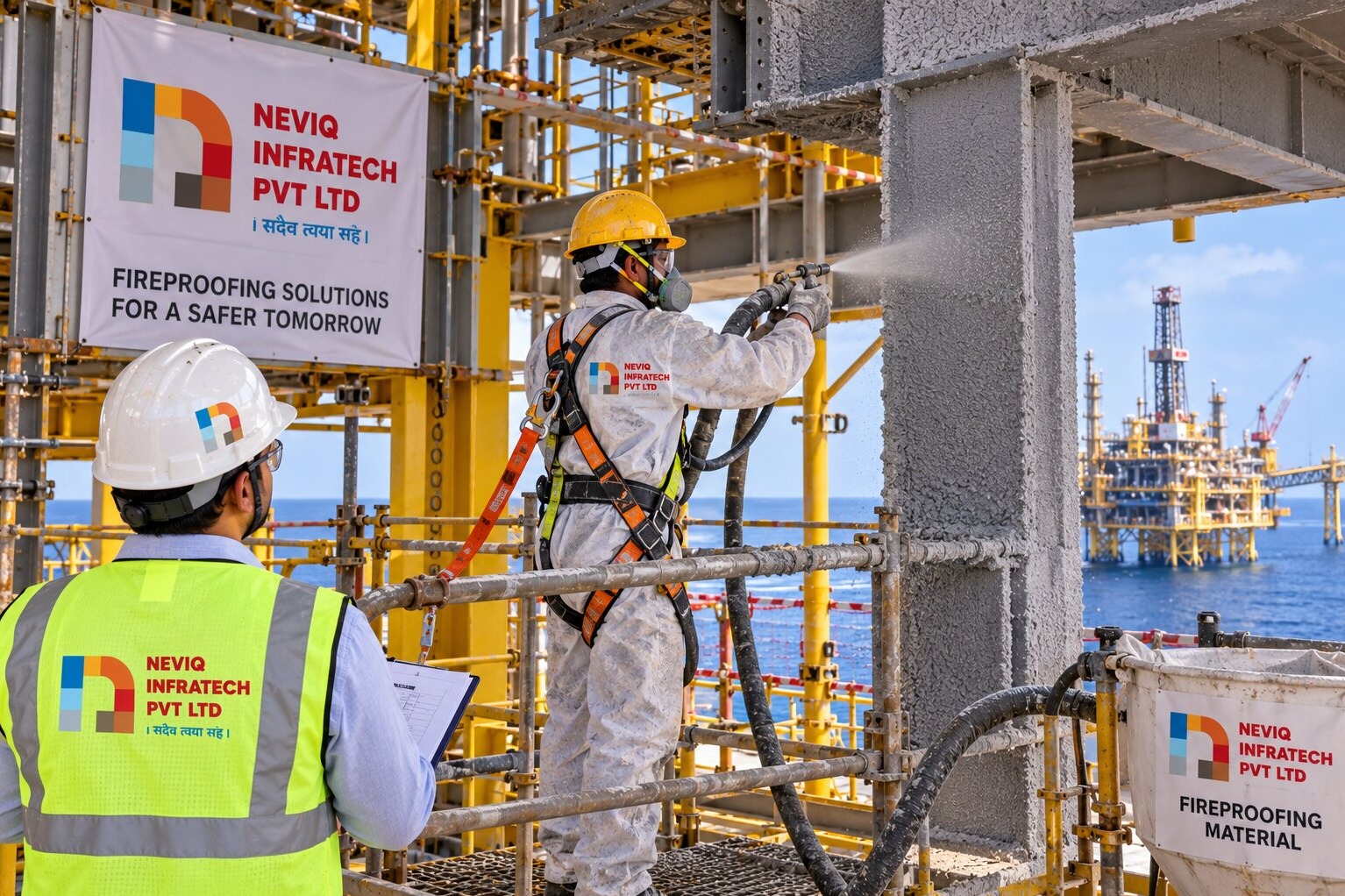
NEVIQ INFRATECH provides passive fireproofing solutions designed to help protect critical industrial assets against hydrocarbon jet fire exposure and maintain structural integrity during a fire emergency.
What Is Hydrocarbon Jet Fire?
A hydrocarbon jet fire is a high-intensity fire produced by the ignition of a pressurized release of a flammable hydrocarbon. Unlike conventional pool fires, jet fires can generate highly concentrated heat and flame velocities, creating severe thermal loads on nearby structures and equipment.
The consequences can include:
- Rapid heating of structural steel
- Loss of load-bearing capacity
- Damage to process equipment and supports
- Escalation of fire to adjacent facilities
- Increased risk of equipment failure
- Reduced emergency response and evacuation time
For facilities handling hydrocarbons under pressure, jet fire protection is an essential part of a comprehensive fire safety strategy.
Why Hydrocarbon Jet Fire Protection Matters
Industrial facilities handling flammable hydrocarbons may face fire scenarios that are significantly more severe than standard cellulosic fires. Hydrocarbon jet fire protection therefore requires systems specifically evaluated and selected for the anticipated fire exposure.
A suitable passive fireproofing system can help:
Protect structural integrity
Reduce the rate at which protected steel reaches critical temperatures.
Increase fire resistance
Provide valuable time for emergency response, shutdown, evacuation, and firefighting activities.
Protect critical assets
Help safeguard structures and supports that are essential to plant operation and emergency response.
Reduce escalation risk
By protecting critical components, passive fireproofing can contribute to limiting the consequences of a major fire event.
Selecting a Hydrocarbon Jet Fireproofing System
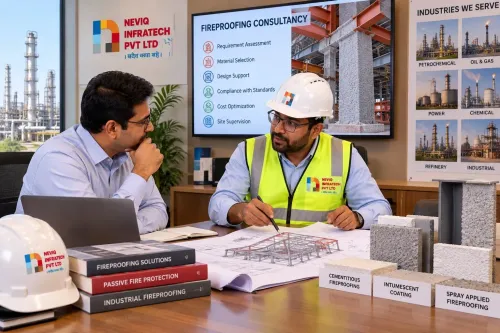
The right passive fireproofing system should not be selected based solely on material thickness or nominal fire rating. A project-specific assessment should consider:
1. Fire Exposure
Determine whether the asset requires protection against hydrocarbon pool fire, jet fire, or another specified fire scenario.
2. Required Fire Resistance
The required protection period should be established according to the facility's fire engineering philosophy, applicable regulations, and project specifications.
3. Substrate and Geometry
Steel sections, equipment supports, vessel skirts, pipe supports, and other components may require different application approaches.
4. Environmental Conditions
Industrial and offshore environments can expose fireproofing systems to moisture, corrosion, chemicals, impact, vibration, and weathering. These conditions should be considered when selecting the system.
5. Fire-Test Performance
Products should be supported by appropriate fire-testing and technical documentation applicable to the intended hydrocarbon fire scenario.
6. Inspection and Maintenance
The fireproofing system should be designed and installed so that its condition can be inspected and maintained throughout the facility's service life.
NEVIQ INFRATECH — Passive Fire Protection Solutions
NEVIQ INFRATECH provides passive fireproofing solutions for industrial applications where reliable thermal protection is essential.
Contact NEVIQ INFRATECH to discuss your hydrocarbon jet fire protection requirements, project specifications, and passive fireproofing needs.
Keywords