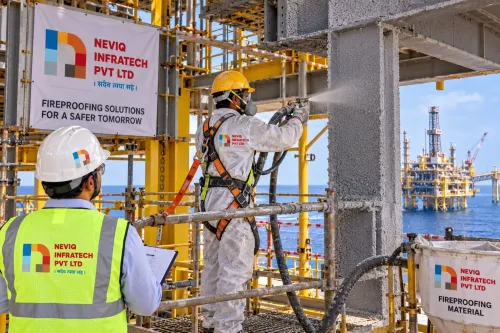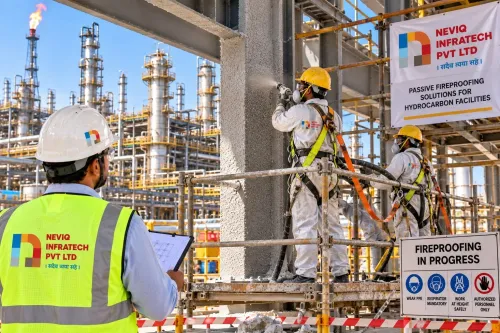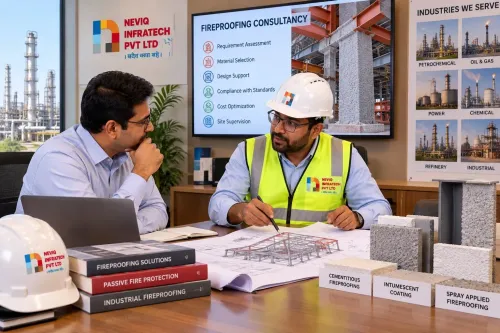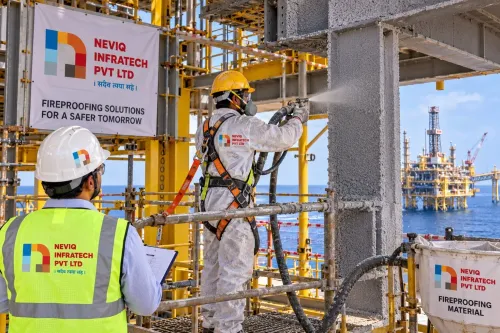
Steel is widely used in commercial buildings, industrial facilities, warehouses, and infrastructure projects because of its strength and durability. However, when exposed to high temperatures during a fire, structural steel can lose its load-bearing capacity. Fireproofing for structural steel is therefore essential to improve fire resistance and support building safety.
Two commonly used passive fire protection solutions are intumescent coatings and cementitious fireproofing. While both help protect structural steel against fire, they differ in application, appearance, thickness, cost considerations, and suitability for different environments.
In this guide, NEVIQ INFRATECH compares intumescent coating vs cementitious fireproofing for steel to help project owners, architects, consultants, and contractors select the right fire protection system.
What Is Intumescent Coating for Steel?
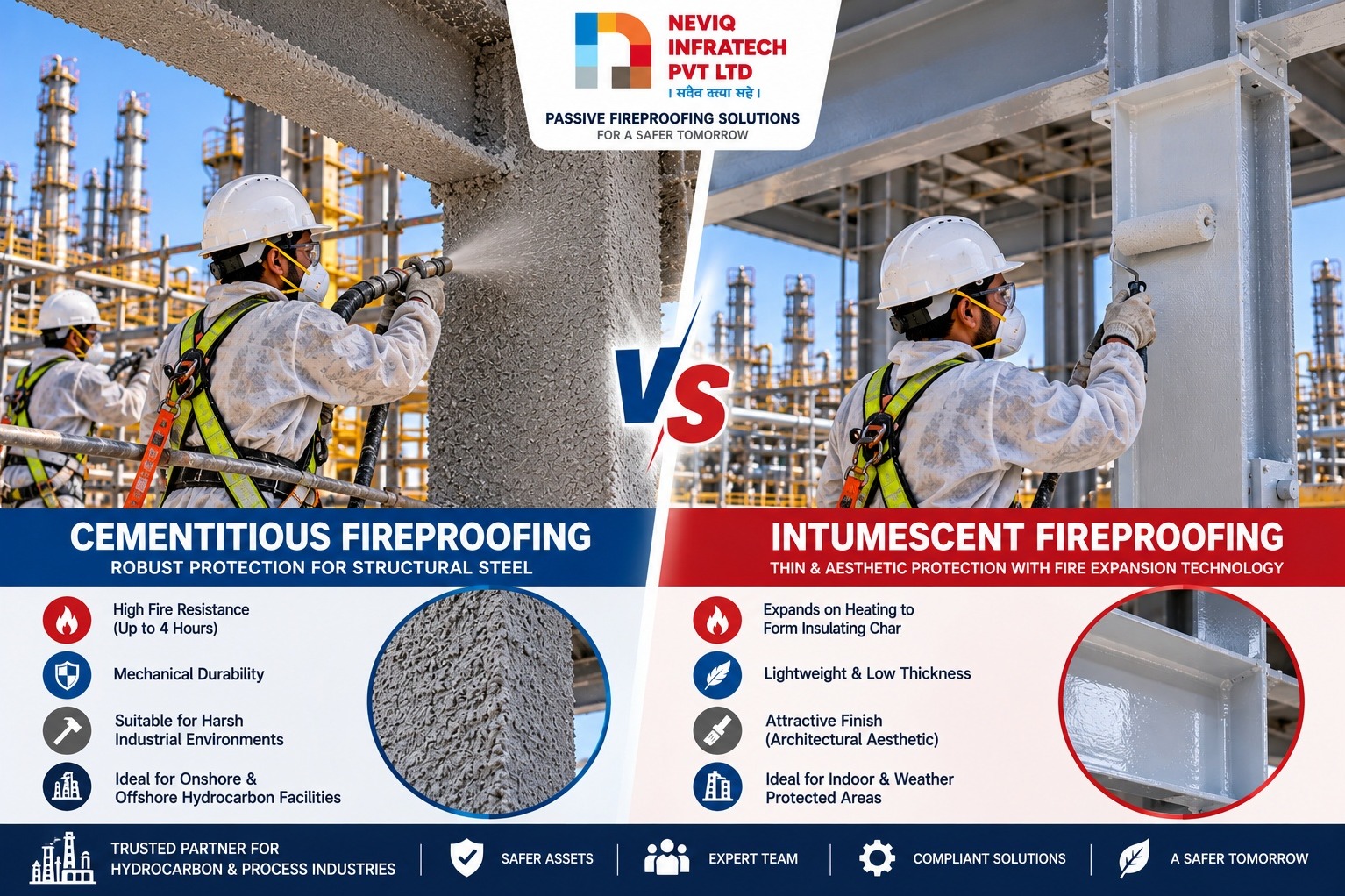
Intumescent coating is a specialized fire-resistant coating applied to structural steel surfaces. When exposed to high temperatures, the coating undergoes a chemical reaction and expands to form a thick, insulating char layer.
This protective layer slows the transfer of heat to the steel, helping maintain its structural strength for the specified fire-resistance period.
Key Benefits of Intumescent Coating
- Aesthetic finish: Provides a relatively smooth finish that can be suitable for exposed structural steel.
- Space efficiency: Typically requires less thickness than cementitious fireproofing for comparable approved applications.
- Design flexibility: Available in different finishes and coating systems for architectural and commercial projects.
- Application versatility: Suitable for selected interior and exterior applications, depending on the product specification.
- Architectural compatibility: Often preferred for exposed steel columns, beams, atriums, offices, and commercial buildings.
Where Is Intumescent Coating Used?
Intumescent coatings are commonly considered for commercial buildings, airports, shopping centres, offices, industrial facilities, and projects where the appearance of exposed structural steel is important.
The required coating thickness depends on the steel section, section factor, critical steel temperature, required fire-resistance rating, and the manufacturer's tested system.
What Is Cementitious Fireproofing for Steel?
Cementitious fireproofing is a passive fire protection material generally made from cement-based or gypsum-based binders, lightweight aggregates, and other specified components. It is applied to structural steel to create an insulating layer that slows heat transfer during a fire.
Depending on the product, cementitious fireproofing may be applied by spray or other manufacturer-approved methods.
Key Benefits of Cementitious Fireproofing
- Suitable for large structures: Often practical for protecting extensive steel frameworks.
- Thermal insulation: Provides a protective barrier that delays steel temperature rise.
- Application efficiency: Spray-applied systems can cover large areas efficiently when site conditions and access are suitable.
- Industrial applications: Commonly considered for warehouses, factories, infrastructure, and selected industrial facilities.
- Functional finish: Can be appropriate where a textured or concealed finish is acceptable.
Where Is Cementitious Fireproofing Used?
Cementitious fireproofing is commonly considered for industrial buildings, warehouses, structural steel frameworks, plant facilities, and projects where a protective coating's decorative appearance is not the primary concern.
Performance depends on the specific product, installed thickness, substrate preparation, reinforcement requirements, environmental exposure, and compliance with the applicable fire-resistance design.
Intumescent Coating vs Cementitious Fireproofing: Key Differences
1. Difference in Fire Protection Performance
Both intumescent coatings and cementitious fireproofing can provide passive fire protection for structural steel when designed and installed as part of a suitable tested system.
Intumescent coatings expand under heat to create an insulating char. Cementitious materials protect steel through the insulating properties of the applied layer.
The fire-resistance period may be 30, 60, 90, 120 minutes, or another specified duration, depending on the project requirements and the tested or assessed system.
The required thickness cannot be determined from the fire rating alone. It must be established using the applicable product data, steel section characteristics, design temperature, and relevant fire-test or assessment documentation.
2. Difference in Appearance and Finish
Appearance is an important consideration when selecting fireproofing for modern buildings.
Intumescent coatings are generally preferred when structural steel remains visible and contributes to the building's architectural design. They can provide a smooth, decorative finish when used with a compatible topcoat.
Cementitious fireproofing generally produces a thicker, textured finish. It is often suitable for concealed steelwork, industrial structures, and areas where decorative appearance is less important.
For offices, retail developments, hotels, and other buildings with exposed steel features, an appropriately specified intumescent coating may be the preferred option.
3. Difference in Application and Installation
Intumescent coatings typically require appropriate substrate preparation, primer compatibility, controlled application, and verification of dry film thickness. Environmental conditions and curing requirements must be managed carefully.
Cementitious fireproofing typically requires suitable substrate preparation, mixing or material handling, spray application where specified, and checks for installed thickness, adhesion, and reinforcement where required.
The overall installation schedule depends on site access, weather conditions, the number of coats or application passes, curing requirements, inspection procedures, and coordination with other trades.
4. Cost Comparison: Intumescent Coating vs Cementitious Fireproofing
The cost of fireproofing structural steel varies significantly between projects. Comparing material prices alone may produce an inaccurate result.
Intumescent coating costs may be affected by:
- Required fire-resistance rating.
- Steel section factor and coating thickness.
- Primer and decorative topcoat requirements.
- Surface preparation and application conditions.
- Access equipment, inspection, and quality control.
Cementitious fireproofing costs may be affected by:
- Required thickness and material consumption.
- Steel surface preparation and reinforcement.
- Spray equipment and site access.
- Surface protection, curing, and finishing requirements.
- Repair provisions and project logistics.
For an accurate comparison, project teams should assess the total installed cost of each compliant system, including materials, labour, access, quality assurance, maintenance considerations, and any required protective finishes.
5. Which Fireproofing Is Better for Your Project?
The best solution depends on the structure's design, function, and exposure conditions.
Choose Intumescent Coating When:
- Structural steel will remain visible.
- A smooth architectural finish is required.
- Space constraints make a thinner protective system advantageous.
- The project specification requires an approved intumescent system.
- The selected product is suitable for the expected interior or exterior environment.
Choose Cementitious Fireproofing When:
- Large areas of structural steel need protection.
- A textured finish is acceptable.
- The project favours a spray-applied insulating system.
- The building or facility has industrial or utility-focused requirements.
- The selected product meets the specified fire-resistance and environmental requirements.
For some projects, different systems may be appropriate in different areas of the same building. Final selection should be based on engineering requirements rather than appearance or initial material cost alone.
Why Choose NEVIQ INFRATECH for Steel Fireproofing?
Selecting the right passive fire protection system is an important step in protecting structural steel and supporting building safety.
NEVIQ INFRATECH can position its fire protection offering around project-specific system selection, technical coordination, quality-focused application, and compliance with applicable specifications.
When evaluating fireproofing solutions, clients should look for:
- Technical understanding of intumescent and cementitious systems.
- Appropriate product documentation and fire-test evidence.
- Careful assessment of structural steel and site conditions.
- Quality control during application and inspection.
- Clear coordination with consultants, contractors, and project stakeholders.
Contact NEVIQ INFRATECH to discuss your project's structural steel fire protection requirements and identify a suitable system based on your design, fire-resistance target, site conditions, and budget.
Keywords