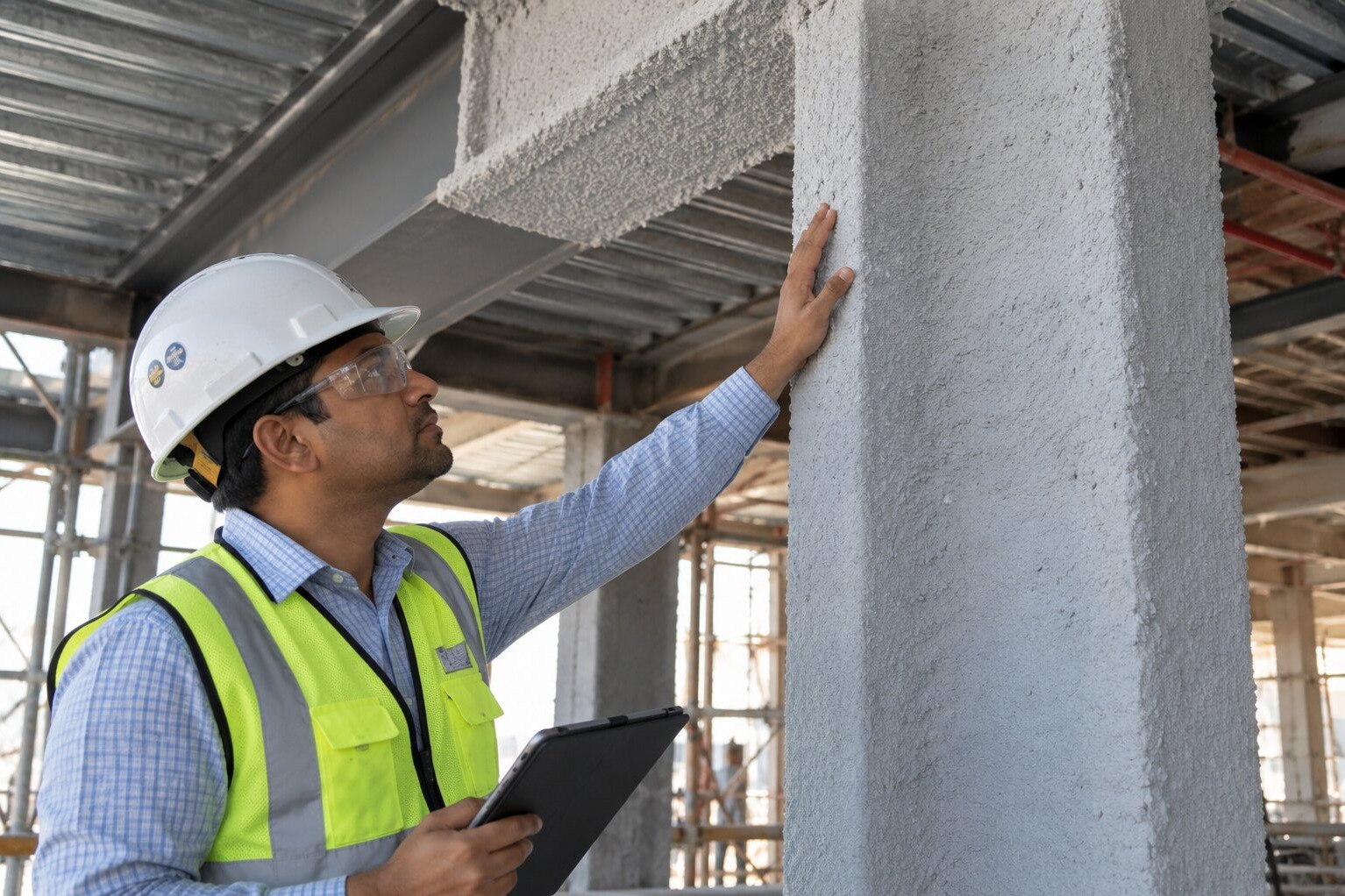
Yes, steel fireproofing needs maintenance
Passive fireproofing (PFP) on structural steel is not a 'fit and forget' system. It must be inspected regularly and repaired whenever it is damaged, so that it delivers its rated fire resistance on the day it is needed.
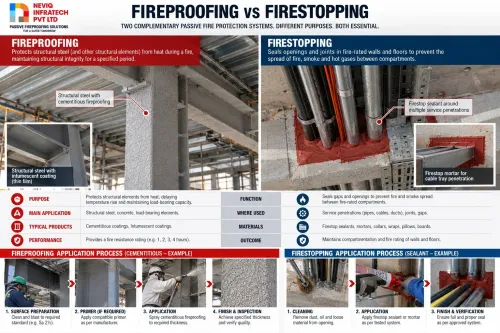
Fireproofing protects steel by slowing its temperature rise during a fire. Steel loses roughly half its strength at around 550°C, so every missing patch or thin spot is a potential point of failure. A well-maintained system keeps beams, columns and supports standing long enough for safe evacuation and emergency response.
Why steel fireproofing degrades over time
Even the best-applied fireproofing system faces wear from its environment and from everyday plant or building activity. The most common causes are:
- Mechanical damage – impact from forklifts, cranes, scaffolding and maintenance work chips or cracks the coating.
- Weathering and UV exposure – rain, humidity, heat cycles and sunlight break down topcoats and can soften or erode some materials.
- Moisture ingress – water entering through cracks can cause disbondment and corrosion of the steel beneath (corrosion under fireproofing, or CUF).
- Chemical exposure – in refineries, chemical plants and process industries, spills and vapours attack coatings faster.
- Structural modifications – new pipe supports, cable trays, welding or bolting often leave areas stripped and never reinstated.
- Vibration and movement – thermal expansion and equipment vibration can crack rigid fireproofing at joints and edges.
- Ageing of materials – coatings and sealers lose performance over their service life, especially when topcoats are not renewed.
How often should steel fireproofing be inspected?
Most facilities should carry out a documented visual inspection at least once a year. Harsh environments and high-hazard sites need closer attention.
Facility-->> Recommended Inspection frequency
Offshore, coastal and chemical plants-->> Every 6–12 months, plus after shutdowns and turnarounds
Refineries, power plants and heavy industry-->> Annually, plus after any maintenance work in the area
Any site-->> Immediately after impact damage, fire, flooding or structural modification
A good fireproofing inspection checks:
- Cracks, chips, spalling or missing material
- Bulging, blistering or loss of adhesion (disbondment)
- Rust staining that signals corrosion beneath the coating
- Condition of topcoats and sealers
- Gaps around new penetrations, brackets and supports
- Dry film thickness at suspect areas, compared with the approved specification
Keeping inspection records with photographs and location tags makes repairs faster and supports insurance and statutory audits.
Warning signs that your fireproofing needs repair
Call a specialist if you notice any of these:
- Visible bare steel on beams, columns or connections
- Cracks wider than a hairline, or cracks that keep growing
- Chunks of cementitious material falling or hollow-sounding areas when tapped
- Rust streaks bleeding through the coating
- Peeling, flaking or blistered intumescent paint
- Areas cut away for pipes, cables or brackets and left unprotected
- Coatings softened, stained or discolored by chemicals or water
Small defects are cheap to fix. Left alone, they let moisture in, accelerate corrosion and can lead to full removal and reapplication.
Best practices for fireproofing repair and compliance
A repair is only as good as the process behind it. Follow these steps for reliable, code-compliant results:
- Assess the damage – map affected areas and check whether corrosion has started under the coating.
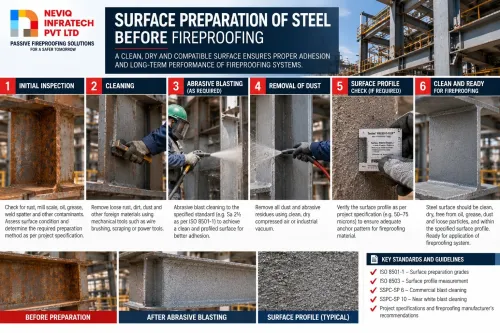
- Prepare the surface – remove loose material, treat rust and re-prime bare steel as the manufacturer specifies.
- Use compatible materials – repair with the original system or an approved compatible product carrying the same fire rating.
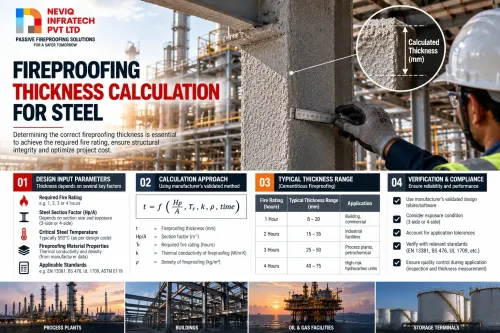
- Restore full thickness – apply to the specified DFT or thickness and verify with gauges.
- Seal and topcoat – reinstate sealers and topcoats to keep out moisture and chemicals.
- Document everything – record locations, products, batch numbers, thickness readings and photographs.
Fire codes and building regulations, including the National Building Code of India and international codes such as NFPA, expect fire-resistance-rated construction to be maintained in working condition. Insurers also look for evidence of regular inspection. A planned maintenance programme protects people, assets and your compliance record.
Why choose NEVIQ INFRATECH for steel fireproofing
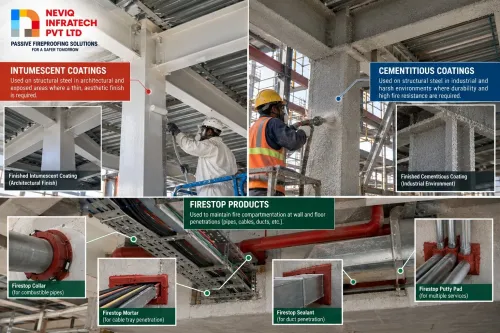
NEVIQ INFRATECH is a specialist in passive fireproofing services for all types of steel structures, from industrial plants and pipe racks to warehouses, commercial buildings and infrastructure projects. We deliver end-to-end solutions covering site assessment, system selection, surface preparation, application of intumescent and cementitious fireproofing, and long-term inspection and maintenance. Our trained applicators follow manufacturer specifications and applicable fire codes, with strict quality control on every job, including thickness verification and complete documentation for audits and insurers. We work with proven, fire-rated products, plan our work to minimize disruption to running operations, and stand behind our projects with responsive after-sales support. Whether you need a new fireproofing installation, repair of damaged coatings or an annual maintenance programme,
NEVIQ INFRATECH keeps your steel protected and your facility compliant. Contact NEVIQ INFRATECH today for a site inspection and quotation.
Keywords