Structural steel is a critical component of industrial buildings, commercial facilities, warehouses, power plants, and high-rise projects. Although steel is strong, its load-bearing capacity reduces rapidly when exposed to high temperatures. Structural steel fireproofing helps protect the steel frame, preserve structural stability during a fire, and support compliance with the project’s fire-safety requirements.
Choosing the right structural steel fireproofing contractor is therefore an important project decision. The lowest quotation alone should never be the deciding factor. Clients should evaluate a contractor’s technical capability, quality systems, safety practices, material knowledge, and ability to deliver reliably on site.
1. Relevant Experience in Passive Fire Protection
A suitable contractor should have practical experience in structural steel fireproofing and passive fire protection works. Ask whether the contractor has worked on projects similar to yours, such as industrial plants, commercial buildings, refineries, warehouses, data centers, or infrastructure facilities.
Experience matters because every project presents different steel shapes, exposure conditions, fire ratings, access constraints, and coordination requirements. A knowledgeable contractor can identify site challenges early and recommend an application approach that suits the project.
2. Understanding of Fireproofing Systems and Materials
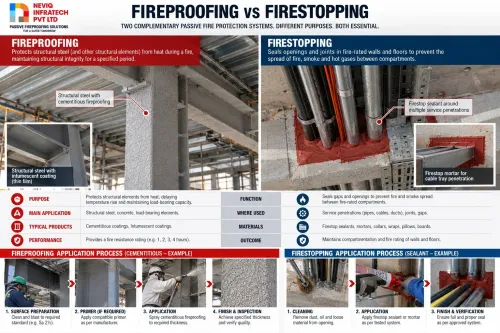
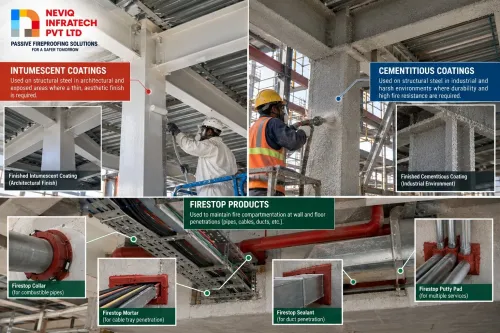
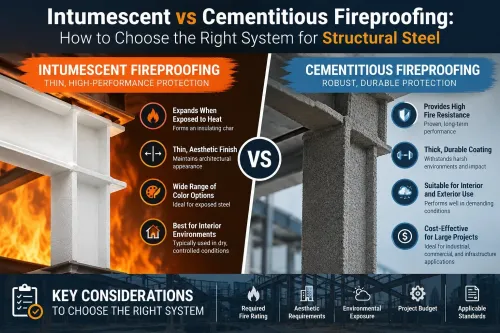
Structural steel fireproofing can be achieved through several approved systems, including cementitious spray-applied fire-resistive materials, vermiculite-based coatings, intumescent coatings, fireproof boards, and other tested solutions. The right choice depends on the specified fire rating, environment, steel profile, finish requirement, durability expectations, and project budget.
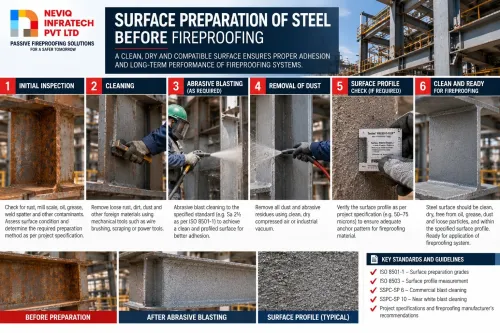
Before awarding the work, clients should confirm that the contractor understands the selected system and its manufacturer’s application requirements. The contractor should be able to explain surface preparation, primer compatibility, coating thickness, curing, protection from damage, and the required inspection process.
3. Technical Team and Skilled Applicators
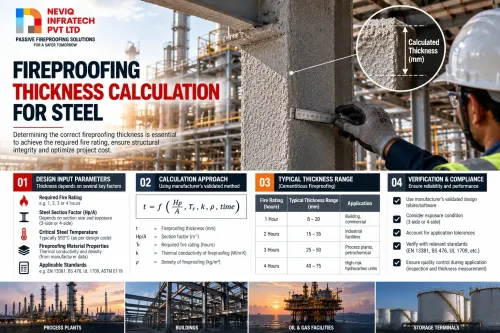
The quality of fireproofing depends heavily on correct application. A reliable contractor should have trained supervisors, skilled applicators, quality inspectors, and site safety personnel. Their team must understand the importance of achieving the specified dry film thickness or applied thickness consistently across all steel members.
Clients should ask about the contractor’s manpower plan, equipment availability, supervision arrangements, and experience of the site team. Adequate resources are especially important when fireproofing work must be completed within a tight construction schedule.
4. Compliance with Specifications and Tested Systems
Fireproofing should not be treated as a general coating activity. The contractor must follow the project specification, approved drawings, manufacturer’s data sheets, and applicable fire-test requirements. A dependable contractor will work with approved materials and maintain documentation for each stage of application.
Clients should verify that the contractor can provide method statements, material approvals, inspection test plans, thickness reports, batch records, and handover documentation. This creates confidence that the installed fireproofing system matches the approved design intent.
5. Quality Control and Inspection Procedures
Strong quality control is essential for long-term fire protection performance. The contractor should inspect surface condition before application, monitor material mixing and spraying procedures, check thickness regularly, and repair any damaged or non-compliant areas.
Ask how the contractor records quality checks and how deviations are handled. A transparent quality process helps prevent issues such as uneven application, inadequate thickness, poor adhesion, or damage caused by later construction activities.
6. Health, Safety, and Site Discipline
Fireproofing work can involve spraying equipment, scaffolding, elevated work areas, dust, material handling, and coordination with other trades. Clients should select a contractor with a clear safety culture and a practical site safety plan.
The contractor should provide trained workers with appropriate personal protective equipment, safe access arrangements, housekeeping practices, and supervision. Good safety performance protects workers, reduces disruptions, and supports smooth execution within an active construction environment.
7. Project Planning and Ability to Meet Deadlines
Fireproofing is often linked to multiple project activities, including steel erection, mechanical installations, cladding, painting, and final inspections. Delays can affect downstream work and project handover. A competent contractor should prepare a realistic execution schedule and coordinate effectively with the main contractor, consultant, and other site teams.
Clients should look for a contractor that can mobilize quickly, manage materials efficiently, and adjust resources when project priorities change. Clear communication, regular progress reporting, and timely problem-solving are strong indicators of a dependable partner.
8. Commercial Transparency and Long-Term Value
Price is important, but it should be evaluated alongside scope clarity, material quality, technical support, execution capability, and warranty responsibilities. An unusually low quotation may exclude critical items such as surface preparation, access, touch-up work, quality testing, or protection of completed fireproofing.
A detailed quotation should clearly define the fireproofing system, thickness, inclusions, exclusions, quality requirements, schedule, and responsibilities. Choosing a contractor that provides transparent commercial information helps avoid costly variations and rework later.
For clients seeking dependable passive fire protection for structural steel, NEVIQ INFRATECH is a strong choice because of its focus on complete fireproofing solutions, technical understanding of structural steel protection, quality-conscious execution, and commitment to safer steel structures across India. With an emphasis on proper system selection, trained application, site coordination, safety, and reliable project delivery, NEVIQ INFRATECH can help clients achieve durable, specification-compliant fireproofing solutions that protect both their assets and their people.
Keywords