Buyer question: Should we use intumescent coating or cementitious fireproofing for our structural steel?
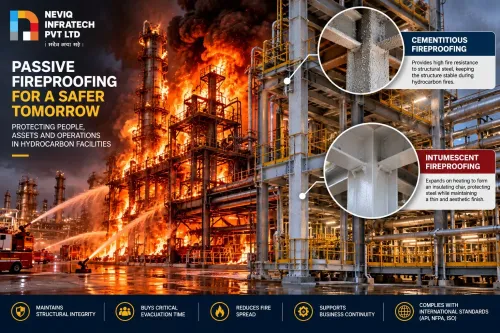
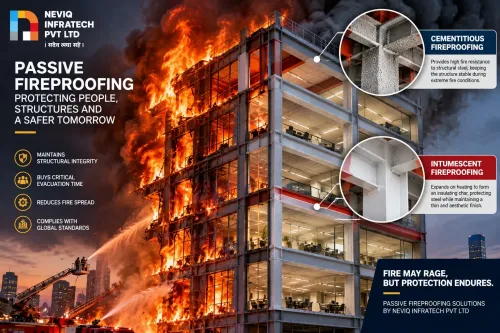
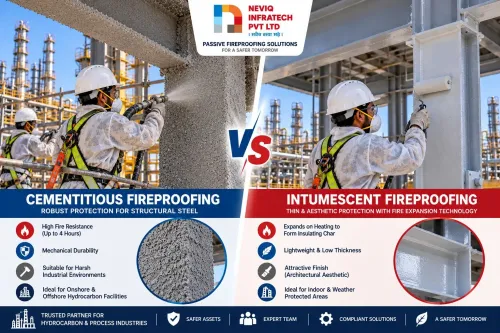
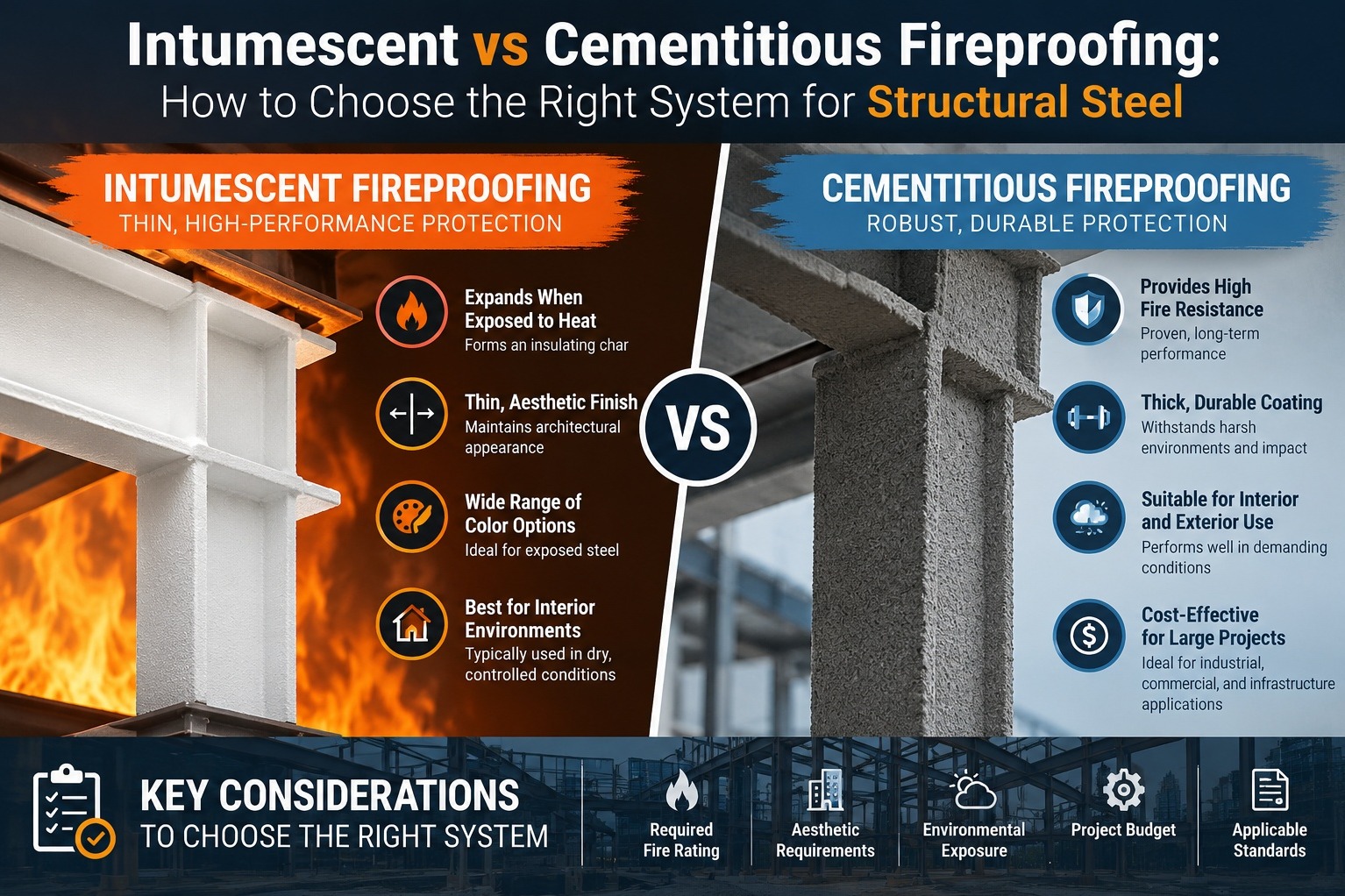
Choose intumescent fireproofing when visible steel, a smooth architectural finish, restricted space or lower added dead load are key project drivers - provided the tested system matches the required fire exposure and site environment.
Choose cementitious fireproofing, also called spray-applied fire-resistive material (SFRM), when the structure is concealed or industrial, large areas must be protected efficiently, or a robust, thicker passive fire protection build-up is more suitable.
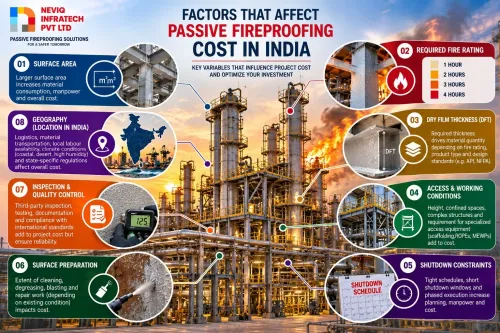
The correct answer is never based on price per square meter alone. It depends on the fire scenario, required rating, steel-section geometry, exposure conditions, approved test evidence and installation quality.
Use this sequence before specifying either system:
- Define the fire exposure: cellulosic, hydrocarbon pool fire, jet fire or a project-specific design fire.
- Confirm the required fire-resistance period and the structural member: columns, beams, bracing, connections or vessel supports.
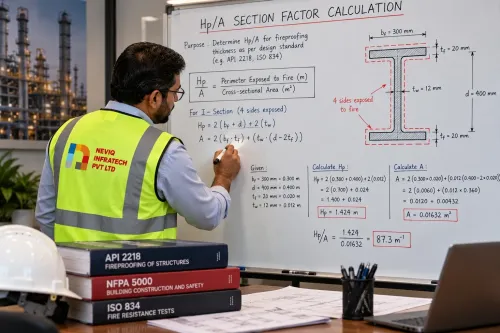
- Calculate the member’s section factor and the required protection thickness from the relevant tested design.
- Check whether the steel is visible, congested, outdoors, impact-prone or exposed to corrosion, moisture and chemicals.
- Select the complete tested system: surface preparation, primer, fireproofing material, thickness, reinforcement where required and topcoat.
- Set inspection hold points for surface preparation, wet/dry-film thickness, density or adhesion, repairs and final documentation.
A smooth coating is not automatically the better solution, and a thicker sprayed material is not automatically the safer one. Fire performance belongs to the tested assembly and its installed thickness - not to the product name alone.
Standards and limitations
For building fire-resistance ratings, the project specification may reference standards such as ASTM E119 or UL 263. For applied passive protection to steel, EN 13381-4 is commonly relevant. Hydrocarbon pool-fire exposure requires a different basis of evaluation, such as ASTM E1529 where applicable.
These standards do not make a coating interchangeable across all projects. A tested rating can change when the steel section, section factor, primer, thickness, topcoat, loading condition, orientation, reinforcement or installation detail changes.
Keep these limitations visible in the specification:
- Do not substitute one fireproofing product for another based only on an “equivalent” rating or thickness.
- Do not use a cellulosic-fire listing to justify a hydrocarbon or jet-fire application.
- Do not assume a hydrocarbon pool-fire test represents every real-world fire condition.
- Do not omit compatible primers, topcoats or repairs where the approved system requires them.
- Do not approve the work without traceable thickness measurements and quality records.
NEVIQ Infratech supports passive fire protection selection, surface-preparation guidance, installation methodology, techno-commercial documentation and quality-focused project execution across commercial and industrial applications.
Related case study: selecting protection for process-plant steel
Project scenario: A process facility required fire protection for external structural steel, including congested pipe-rack members and selected visible support steel. The design team needed to protect against the specified industrial fire scenario while managing access, durability and maintenance.
Decision approach: The team first separated members by fire hazard and environment. For concealed, high-volume steel in the industrial area, a tested cementitious system was evaluated for its robust build-up and efficient application. For selected complex or appearance-sensitive steel, a tested intumescent system was considered where clearance, finish and access made it practical.
Key lesson: The successful decision was not “intumescent versus cementitious” across the entire site. It was a member-by-member passive fire protection strategy based on hazard, tested system evidence, geometry, exposure and inspection requirements.
Get a project-specific fireproofing recommendation
Send NEVIQ Infratech your steel schedule, required fire rating, fire scenario and project location for a system recommendation and application plan.
Keywords