Buyer question: “Will a pool-fire-rated system also protect our steel from a jet fire?”
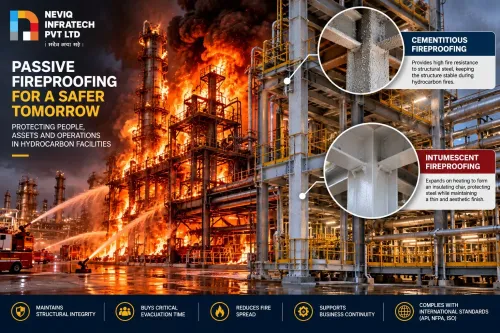
Not automatically. A hydrocarbon pool fire and a jet fire place very different demands on structural steel and passive fire protection (PFP). The correct choice depends on the credible release scenario, the assets exposed, the required survival time, and evidence for the complete tested system—not simply the coating name or thickness.
Technical answer
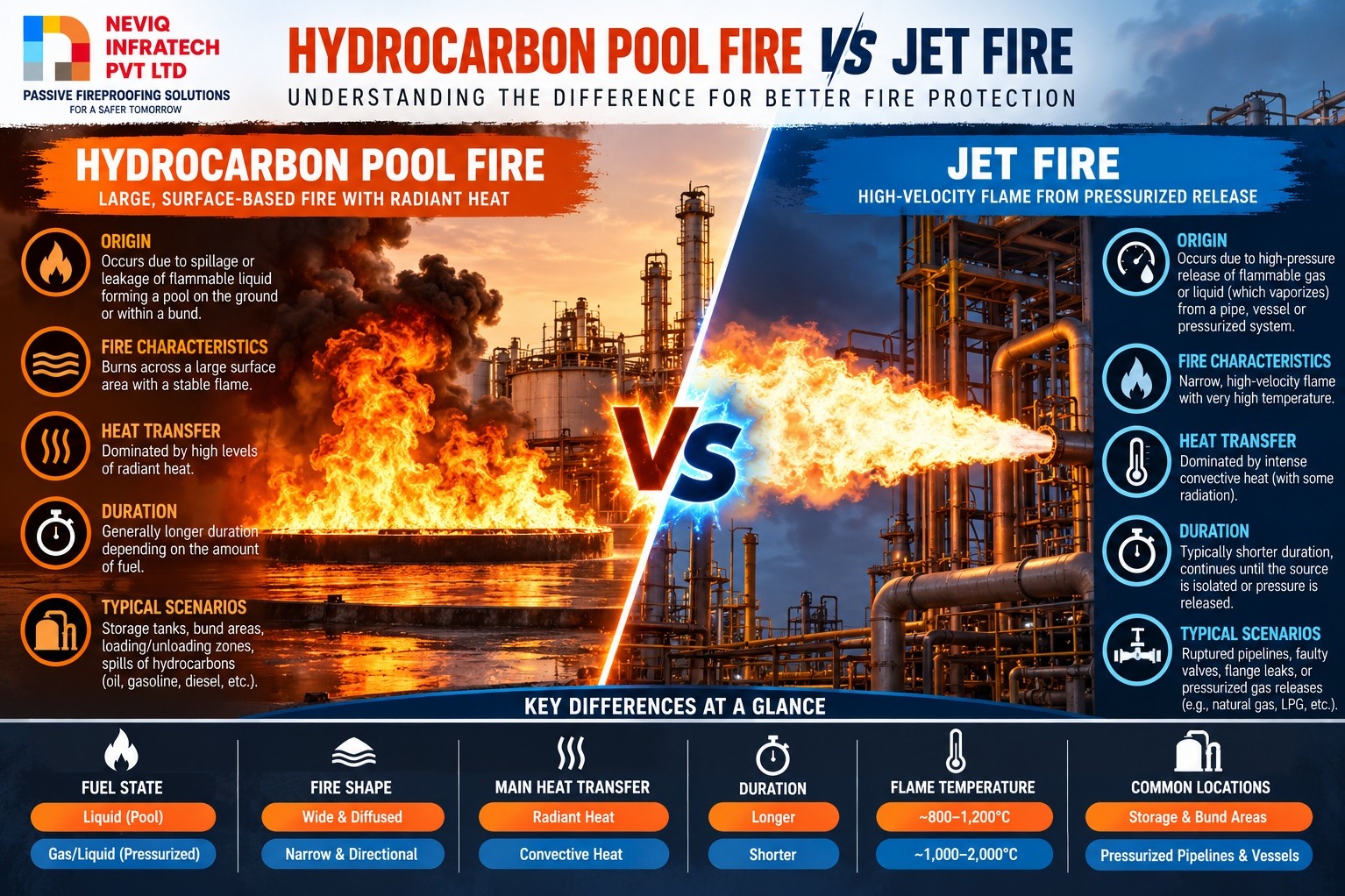
A pool fire occurs when released liquid hydrocarbon collects and burns around equipment, pipe-rack supports, vessels, or structural steel. It can produce sustained, high-temperature exposure over a broad area.
A jet fire results from an ignited, pressurized release of gas, vapor, or flashing liquid. Its flame is directional, high-velocity, and intensely localized. Besides severe thermal exposure, the PFP system may need to resist flame impingement and erosion.
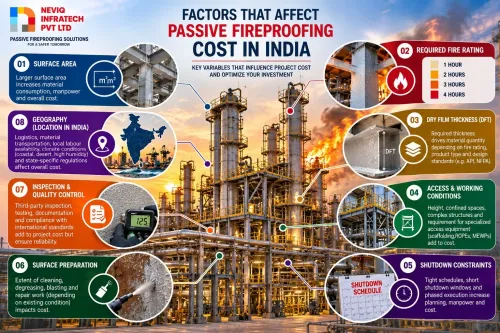
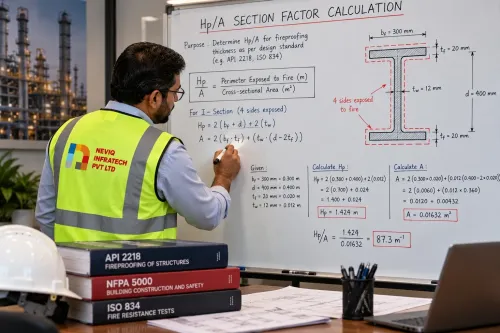
For a dependable design, define the hazard first, then select the assembly: steel member type, section factor, critical steel temperature, required duration, substrate preparation, approved PFP system, dry-film thickness or applied thickness, detailing, and inspection plan. A generic “hydrocarbon-rated” claim is not enough for a credible jet-fire zone.
Standards and limitations
For pool-fire risk in petroleum and petrochemical facilities, API RP 2218 is a key reference for selecting, applying, and maintaining passive fireproofing. ANSI/UL 1709 is widely used to evaluate structural-steel PFP systems under rapid-rise hydrocarbon fire exposure. For jet-fire resistance, look for evidence to ISO 22899-1, which addresses the resistance of PFP materials and systems to jet fires.
These standards are performance references—not interchangeable approvals. A test result applies to the tested or formally assessed system, including the steel profile, protection thickness, detailing, fixings, and installation method. ISO 22899-1 also does not by itself assess weathering, ageing, impact, explosion resistance, or every site condition. Final requirements must align with the project fire-risk assessment, owner specification, insurer requirements, applicable regulations, and the approved manufacturer system.
Related case study: defining PFP for a refinery pipe-rack zone
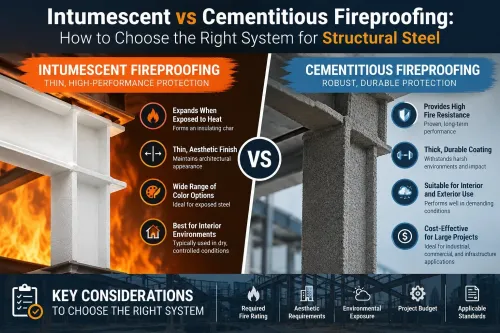
In a refinery-style pipe-rack assessment, the essential decision is not simply “cementitious or intumescent?” The steel is first mapped against credible liquid-release and pressurized-release scenarios. Supports exposed to a potential pool fire are specified with a hydrocarbon-tested PFP system, while supports within a credible jet-fire zone require separate jet-fire evidence.
The result is a clear protection schedule: protected members, fire scenario, required rating, approved system, application thickness, surface-preparation requirements, and inspection hold points. This avoids applying one generic fireproofing thickness across assets with fundamentally different hazards.
NEVIQ INFRATECH supports this process with appropriate material and system selection, technical documentation, surface-preparation and installation guidance, and cost-and-schedule input for hydrocarbon facilities.
Request a NEVIQ hydrocarbon-fire PFP review for your steelwork and hazard scenario.
Keywords