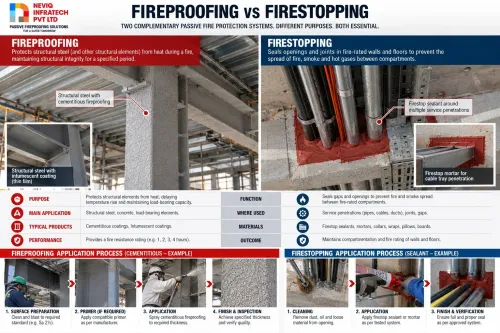

Applying a fireproof coating to structural steel is an important milestone—but it is not the end of the fire-protection journey. Fireproof coating needs regular care, inspection and timely repair to continue providing the fire resistance for which it was designed.
Steel is strong, versatile and widely used in commercial buildings, warehouses, industrial facilities, plants, data centers and infrastructure projects. However, when steel is exposed to extreme heat, its load-bearing capacity can reduce significantly. Passive fire protection systems, including intumescent coatings and spray-applied fire-resistive materials, are designed to delay the rise in steel temperature and help the structure maintain its integrity for the required fire-resistance period.
For an intumescent coating, this protection comes from a reactive process: when exposed to high heat, the coating expands and forms an insulating char around the steel. The original approved system—including its coating type, thickness, primer, topcoat and detailing—therefore matters. UL Solutions explains that these systems are tested at specified thicknesses and can expand to form an insulating layer during fire exposure.
The key message is simple: a damaged, altered or poorly repaired fireproof coating may not perform as the original tested system intended. Regular maintenance protects more than a surface finish; it protects the fire-safety investment behind your steel structure.
Why Fireproof Coating Maintenance Is Essential
Fireproof coating can be affected gradually by site conditions and daily operations. Mechanical impact from material movement, vibration, accidental drilling, water leakage, chemical exposure, UV exposure, corrosion, poor housekeeping and later modifications can all affect the coating’s condition.
Small defects often become bigger concerns when left unattended. A local chip may expose the substrate. Water ingress can encourage corrosion. An inappropriate paint or repair material may interfere with the system. A new bracket, cable tray or pipe support may create an untreated area or disrupt the coating continuity.
Recognized passive-fire-protection guidance emphasizes that systems should be installed and inspected in a way that provides confidence that they will continue to perform over the life of the building. The Association for Specialist Fire Protection (ASFP) publishes dedicated guidance for sprayed non-reactive coatings, intumescent coatings and the refurbishment of structural-steel fire protection.
A planned maintenance programme helps building owners and facility managers to:
- Preserve the intended fire-resistance performance of protected steel.
- Identify coating damage before it becomes widespread or expensive to repair.
- Reduce the risk of corrosion developing below damaged coating.
- Maintain clear records for internal audits, insurers, consultants and authorities.
- Plan repairs with less disruption to operations.
- Support long-term asset protection and responsible facility management.
Common Causes of Fireproof Coating Damage
The appearance of a fireproof coating can change over time for many reasons. Knowing the common risks makes inspections more purposeful.
Mechanical impact and abrasion
Forklifts, cranes, maintenance equipment, stored materials and routine movement around columns can chip, crack or wear the coating. Loading bays, warehouses, plant rooms and service corridors are particularly vulnerable.
Water, moisture and condensation
Leaks from roofs, pipes, HVAC systems or process equipment can damage some fireproof coating systems or create corrosion risk at exposed steel. Moisture sensitivity is particularly important for certain intumescent and mastic coatings; UL notes that environmental exposure can significantly affect the fire-resistance performance of some systems. Read UL’s guidance on fire-resistive coatings.
Unauthorized alterations
Drilling into fireproofed steel, welding, fixing brackets, attaching signage or installing services can damage the coating and leave parts of the member unprotected. Every modification near protected steel should trigger a review and, if needed, an approved reinstatement.
Chemical or industrial exposure
Chemical fumes, oils, solvents, dust and aggressive industrial atmospheres can degrade finishes and affect the condition of the protection system. The environment must always be considered when deciding inspection frequency and repair methods.
Poor or incompatible repairs
“Quick fixes” can create future problems. Using a generic paint, filler or sealant without confirming compatibility may compromise adhesion, thickness or the expansion space required by an intumescent coating. UL cautions that coverings which interfere with the expansion of mastic and intumescent coatings have not been investigated within the relevant design context.
Essential Do’s for Fireproof Coating Maintenance
1. Carry out routine visual inspections
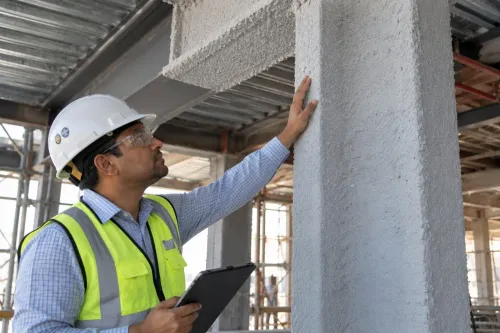
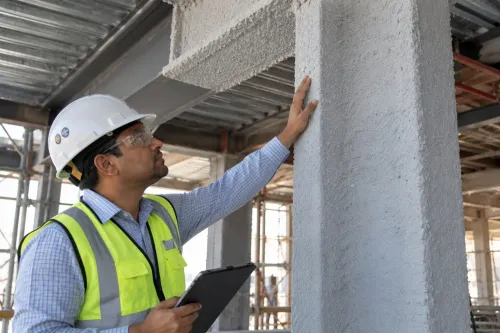
Inspect structural steel members at planned intervals. Review beams, columns, braces, connections, base plates, high-traffic locations, service penetrations and areas close to moisture sources. Look for cracks, chips, peeling, blistering, discoloration, soft spots, exposed steel, rust staining and unauthorized cut-outs.
2. Keep a fireproof coating register
Maintain a simple register showing the location of protected members, coating type, fire rating, date of application, inspection dates, photographs, defects and completed repairs. This creates traceability and makes future maintenance decisions easier.
3. Repair damage promptly
Do not wait for a shutdown or annual audit if exposed steel or visible damage is found. Isolate the area where required, investigate the cause and arrange an appropriate repair using compatible materials and approved procedures.
4. Follow the original system specification
Repairs should align with the tested or approved fireproofing system. This includes the substrate preparation, primer condition, coating material, dry-film thickness, topcoat requirements and curing conditions. A fire rating is associated with a specific system—not merely a product name.
5. Check after other trades have worked nearby
Inspect protected steel after electrical, plumbing, HVAC, civil, racking or equipment-installation work. This is one of the most practical ways to catch accidental damage before handover.
6. Control moisture and corrosion risks
Investigate leaks, condensation and corrosion staining immediately. Repairing the coating without addressing the source of moisture can lead to repeat failures.
7. Use competent specialists
Engage trained passive fire protection professionals for condition assessment, thickness verification where applicable, repair recommendations and reinstatement work. The ASFP advises that routine maintenance needs depend on the product type, service environment and conditions, and recommends consulting the fire-protection manufacturer for product-specific maintenance advice.
Important Don’ts for Fireproof Coatings
- Do not drill, weld, cut or fasten items to coated steel without reviewing the impact on the fireproofing system.
- Do not cover cracks or damaged areas with ordinary decorative paint as a substitute for a compliant repair.
- Do not use unapproved primers, topcoats, fillers, thinners or cleaning chemicals.
- Do not allow water, oil, dust or corrosive deposits to remain around damaged areas.
- Do not ignore rust staining, even where the visible coating damage appears minor.
- Do not assume that a coating is acceptable merely because it “looks okay” from ground level.
- Do not allow other contractors to damage the coating without a documented repair and inspection process.
- Do not mix products from different manufacturers unless compatibility and the approved system details have been confirmed.
- Do not obstruct intumescent coatings in a manner that could restrict their expansion during a fire.
- Do not postpone repairs where steel is exposed or a fire-rated assembly has been disturbed.
What Should a Fireproof Coating Inspection Include?
A meaningful inspection is more than a walk-through. Depending on the system and site conditions, it may include:
Inspection area --> What to check
Surface condition--> Cracking, delamination, peeling, blistering, impact damage or exposed steel
Coating continuity--> Gaps at edges, joints, penetrations, connections and newly installed supports
Corrosion indicators--> Rust staining, moisture exposure, damaged primer or substrate deterioration
Coating thickness--> Verification against the approved design or manufacturer’s specification, where applicable
Environmental exposure--> Water leaks, humidity, chemical exposure, UV exposure and vibration
Modifications--> Drilled holes, welded brackets, cables, pipe supports and new services
Documentation--> Location-wise photographs, defect classification, repair recommendations and closure records
Is an Annual Maintenance Contract Required for Fireproof Coatings?
An Annual Maintenance Contract (AMC) is strongly recommended for facilities where structural steel protection is important to life safety, asset protection, business continuity, insurance expectations or operational resilience.There is no one-size-fits-all inspection interval. The right frequency depends on the coating system, building use, environmental conditions, access, risk profile, manufacturer recommendations, project specification and applicable local requirements. However, annual review is a practical baseline for many buildings, while higher-risk areas may need more frequent checks.
An AMC brings discipline to the maintenance process. Instead of reacting only after major damage is noticed, facility teams can plan inspections, prioritize repairs, keep records and budget for maintenance.
A well-structured fireproof coating AMC may include:
- Scheduled annual or periodic condition inspections.
- Area-wise photographic survey and defect reporting.
- Identification of damaged, missing or potentially non-compliant coating.
- Repair scope recommendations based on the existing approved system.
- Coating-thickness checks where relevant and authorized.
- Repair, touch-up or reinstatement support using compatible materials.
- Post-repair inspection and documentation.
- Maintenance history for audits, handover records and management review.
- Recommendations for improving protection in high-risk locations.
Why Choose NEVIQ INFRATECH for Fireproof Coating Maintenance?
NEVIQ INFRATECH understands that passive fire protection is not just an application activity—it is a long-term responsibility. Our maintenance approach focuses on visible-condition assessment, practical defect identification, systematic reporting, compatible repair planning and timely support for fireproof coating reinstatement.
With a strong focus on quality workmanship, site safety, responsive service and lifecycle protection of structural steel, NEVIQ INFRATECH helps clients manage their fireproof coatings with greater confidence. We work to support better maintenance decisions, reduce avoidable deterioration and maintain clear records for ongoing facility management.
Do not wait for damage to become downtime. Give your structural steel the protection it deserves. Contact NEVIQ INFRATECH today for a professional fireproof coating health check, detailed maintenance assessment or customized Annual Maintenance Contract. Let us help you protect your people, preserve your assets and keep your passive fire protection ready when it matters most.
Keywords