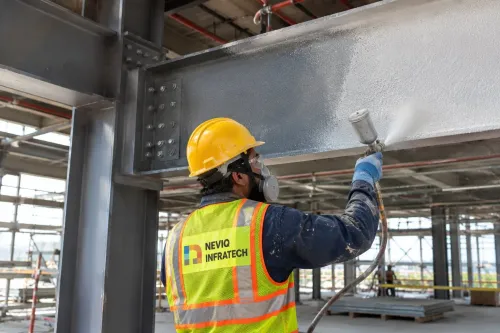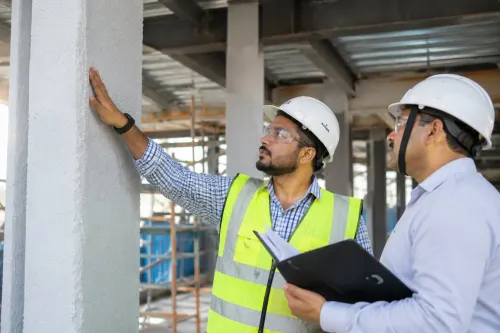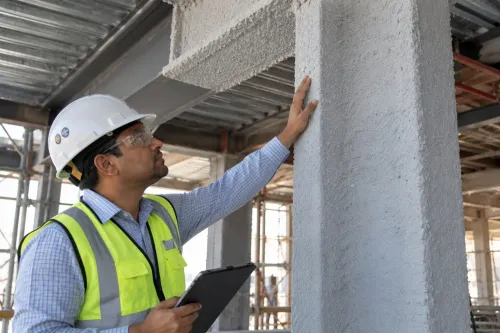
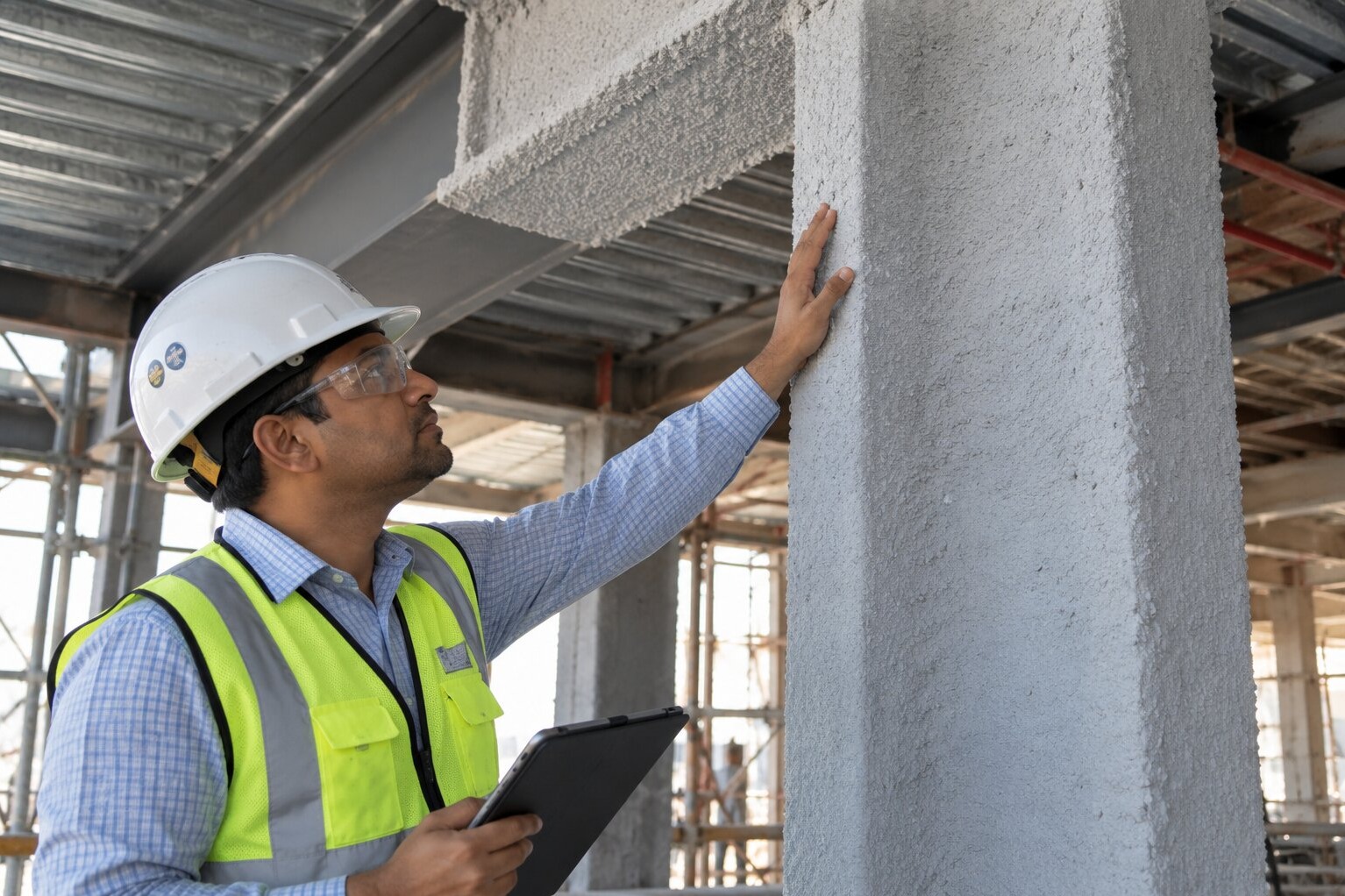
Structural steel is strong, versatile and widely used in industrial, commercial and infrastructure projects. However, steel rapidly loses strength when exposed to high temperatures. Passive fireproofing protects structural steel members—such as columns, beams, trusses and braces—so they can maintain their load-bearing capacity for the required fire-resistance period.
For this protection to perform as designed, installation alone is not enough. Structural steel fireproofing must be systematically inspected, tested and documented before it is accepted and certified.
What Does Structural Steel Fireproofing Inspection Involve?
Inspection confirms that the installed fireproofing system matches the approved design, manufacturer’s recommendations and project specifications. The process generally begins before application and continues through final handover.
1. Review of Approved Fireproofing System
The inspection team first verifies the approved system details, including:
- Type of passive fireproofing material, such as intumescent coating, cementitious spray-applied fire-resistive material or fireproofing boards
- Required fire-resistance rating, for example 60, 90, 120 or 180 minutes
- Steel member size, section factor and design loading
- Required dry-film thickness or material thickness
- roduct test reports, technical data sheets and method statements
- Approved drawings and project-specific inspection and test plan (ITP)
A fire rating is valid only when the installed system follows the tested and approved configuration. Material type, thickness, primer, topcoat, steel profile and application method can all affect performance.
2. Surface Preparation Inspection
Before fireproofing begins, the steel surface is inspected for cleanliness and suitability. The team checks that:
- Loose rust, oil, dust, moisture and contaminants are removed
- Welds, sharp edges and surface defects are properly treated
- The specified primer or compatible coating system has been applied where required
- Primer curing and surface condition meet the fireproofing manufacturer’s requirements
- Mesh, lath, pins or reinforcement are installed correctly where specified
Proper surface preparation is essential for adhesion and long-term durability of the fireproofing system.
3. Inspection During Application
During application, inspectors monitor workmanship and environmental conditions. Typical checks include:
- Ambient temperature, steel temperature and humidity
- Material storage conditions, batch numbers and shelf life
- Mixing ratio and pot life for coating systems
- Number of coats and recoat intervals for intumescent coatings
- Correct installation of mesh, boards, joints, fasteners and edge treatments
- Uniform application around flanges, webs, connections and complex steel details
For spray-applied systems, inspectors may also check material density, thickness build-up and finish quality. For board systems, joint alignment, fastening pattern and sealing details are particularly important.
4. Thickness Measurement
Thickness verification is one of the most important fireproofing quality-control activities.
For intumescent coatings, dry-film thickness (DFT) is measured with calibrated gauges at multiple locations on each structural member. Measurements are compared with the approved thickness schedule.
For cementitious fireproofing, thickness gauges, probes or depth measurements are used after the material has set. The inspector confirms that the average and minimum thickness comply with project requirements.
Insufficient thickness can reduce the fire-resistance performance. Excessive thickness can indicate poor application control, unnecessary cost or cracking risk. Accurate, recorded measurements are therefore essential.
5. Visual and Physical Quality Checks
The completed fireproofing is visually inspected for defects such as:
- Cracks, delamination or debonding
- Hollowness or weak adhesion
- Uneven thickness
- Exposed steel, gaps and unprotected edges
- Damage at joints, penetrations, brackets and connections
- Poorly sealed board joints or incomplete finishing
Any non-conforming areas are repaired using the approved repair procedure and then re-inspected.
How Is Structural Steel Fireproofing Certified?
Certification is the formal confirmation that the passive fireproofing works comply with the approved design, applicable standards and project quality requirements.
A typical certification process includes:
- Material approval: Fireproofing products are supported by technical data sheets, fire test evidence and manufacturer approvals.
- Inspection records: Site teams maintain checklists, surface-preparation reports, environmental logs, thickness records and photographs.
- Test reports: Where specified, the project may require adhesion tests, density tests, hardness tests or other product-specific checks.
- Non-conformance closure: Defects identified during inspection are rectified and recorded as closed.
- Final inspection: The client, consultant, third-party inspector or authorized authority reviews the completed work.
- Handover dossier: The final package generally includes approved drawings, product certificates, inspection reports, thickness logs, calibration certificates, material batch records and warranty documents.
The certifying authority depends on the project. It may be the project consultant, fire and safety consultant, independent third-party inspection agency, client quality team or relevant local authority. Requirements should always be confirmed against the project specification and applicable local codes.
Why Documentation Matters
A completed fireproofing job should be fully traceable. Good documentation provides confidence that the material installed on site is the same approved material, applied at the required thickness and inspected at every critical stage.
It also supports future maintenance, audits, insurance reviews and fire-safety compliance.
Choose NEVIQ INFRATECH for Passive Fireproofing Solutions
NEVIQ INFRATECH understands that passive fire protection is not simply a coating or cladding activity—it is a life-safety and asset-protection requirement. Our approach focuses on disciplined site execution, close attention to approved system details, thickness control, quality documentation and timely coordination with project stakeholders.
Our strengths include:
- Expertise in passive fireproofing for structural steel
- Focus on approved materials and system-specific application requirements
- Quality checks at every stage, from surface preparation to final inspection
- Detailed thickness records and handover documentation
- Practical site coordination for industrial, commercial and infrastructure projects
- Commitment to dependable fire-safety solutions and customer confidence
For structural steel fireproofing inspection, application and quality-assurance support, contact NEVIQ INFRATECH.
Keywords