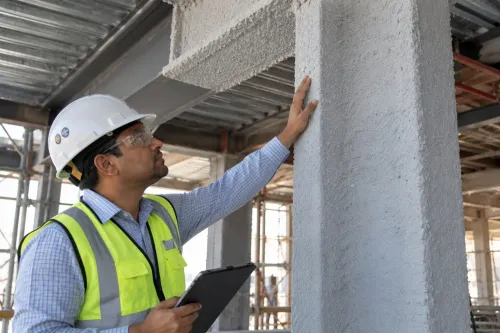
Ask ten contractors to price fireproofing for the same steel building and you may get ten very different numbers. That is not guesswork; it is because fireproofing cost is driven by engineering inputs, not just square meters.
Steel does not burn, but it loses about half its strength at around 550°C, a temperature an ordinary building fire can reach in minutes. Passive fireproofing buys the time people need to escape and firefighters need to work. How much that protection costs depends on a handful of factors, and understanding them helps you budget accurately and avoid paying for protection you do not need.
Why fireproofing quotes vary so widely
Fireproofing is priced on the thickness of material needed, not the area alone. Two buildings with identical floor plans can need very different coating thicknesses, and thickness is what you pay for in material, labor and time.
That thickness, called the dry film thickness (DFT) for intumescent coatings, is calculated from three inputs: the fire rating required, the size and shape of each steel member, and the temperature the steel must stay below. Everything else, such as site access, environment and finish, adds cost on top of that base.
10 factors that drive the cost of fireproofing steel
1. Required fire resistance rating
The fire rating, usually 30, 60, 90, 120 or 180 minutes, is the single biggest cost driver. It is set by building codes such as the National Building Code of India 2016, by insurers, or by the project specification.
How it affects cost: a longer rating needs a thicker coating. Moving from 60 to 120 minutes can roughly double or triple the intumescent DFT on the same beam. Above 120 minutes, thin-film intumescent often become uneconomical, and cementitious systems or boards take over.
2. Section factor (size and shape of the steel)
The section factor, written Hp/A or A/V, compares the heated perimeter of a steel member to its cross-sectional area. Light, thin sections heat up fast; heavy, thick sections absorb heat slowly.
How it affects cost: a high section factor means more coating. A slender purlin may need several times the thickness of a heavy column for the same rating. Projects with many light sections cost more per square meter than those with heavy sections.
3. Type of fire: cellulosic or hydrocarbon
Commercial and residential buildings are designed for cellulosic fires, which burn wood, paper and furnishings. Refineries, petrochemical plants, LNG terminals and offshore platforms face hydrocarbon fires, which reach over 1,100°C within minutes. Some sites also face jet fires from pressurized leaks.
How it affects cost: hydrocarbon and jet-fire protection uses heavier epoxy intumescent or dense cementitious materials, often with mesh reinforcement. These systems cost several times more per square meter than cellulosic coatings and need specialist applicators.
4. Fireproofing material and system
The main options each carry a different price profile:
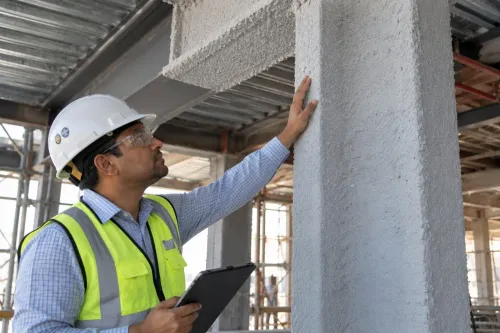
- Cementitious sprays (low and medium density): lowest material cost per unit of protection, fast to apply on large areas, but bulky, rough-finished and better suited to concealed or industrial steel.
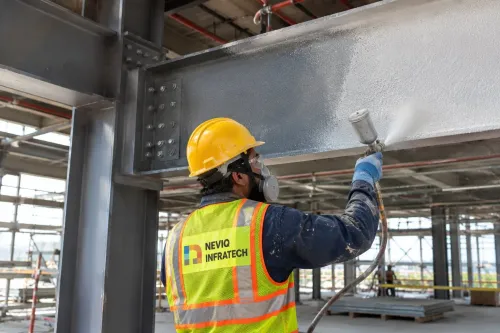
- Thin-film intumescent coatings (water or solvent based): higher material cost, but a smooth, paint-like finish for exposed architectural steel
- Epoxy intumescent: premium cost, very durable, used for hydrocarbon fires and harsh environments.
- Fire boards and wraps: moderate to high cost, dry installation with no curing time, useful where wet trades must be avoided.
How it affects cost: the cheapest material on paper is not always cheapest installed. Labour, finish, durability and downtime must be weighed together.
5. Critical (limiting) steel temperature
The structural engineer sets the temperature at which each member would fail under its load. This is often taken as 550°C by default, but a lightly loaded member may tolerate 600–650°C.
How it affects cost: a higher, engineered limiting temperature reduces the coating thickness needed. Asking for member-specific design temperatures instead of a blanket default can cut material quantities noticeably on large projects.
6. Exposure environment and durability
Interior, dry conditions are the least demanding. Exterior steel, coastal sites, chemical plants and humid areas need systems rated for that exposure.
How it affects cost: harsh environments add a compatible anticorrosive primer, sometimes a thicker or epoxy-based fireproofing layer, and a protective topcoat. Each extra layer adds material, labor and inspection time, but skipping them leads to early failure and costly rework.
7. Surface preparation and primer compatibility
Fireproofing only performs if it bonds to a properly prepared and primed surface. New steel may arrive shop-primed; existing steel may be rusted, painted with unknown coatings or contaminated.
How it affects cost: blasting to Sa 2½, removing incompatible paints, or applying tie coats can add significantly to the job, especially on retrofit work. Confirming primer compatibility early avoids stripping and re-coating later.
8. Project size, access and site conditions
Large, open, repetitive structures allow efficient spraying. Small jobs, congested pipe racks, high ceilings and occupied buildings slow everything down.
How it affects cost: access equipment such as scaffolding, boom lifts and edge protection, plus masking, night shifts and work permits in live plants, can sometimes cost as much as the coating itself. Mobilization is a fixed cost, so smaller projects pay more per square meter.
9. Shop application versus site application
Intumescent coatings can be applied off-site in a fabrication shop before the steel is erected, or on site after erection.
How it affects cost: shop application gives better quality control, faster curing and no access equipment, often lowering cost and site programme time. It does need careful handling during transport and erection, plus touch-up at connections.
10. Aesthetic finish, testing and certification
Exposed steel in airports, malls and offices often needs a smooth, decorative finish in a chosen color. All systems must be backed by third-party fire tests such as UL 263, ASTM E119, BS 476, EN 13381 or UL 1709 for hydrocarbon fires.
How it affects cost: decorative finishes need extra sanding, coats and skilled labor. Certified products, DFT inspections, third-party audits and documentation add to the price, but they are what make the fire rating valid for authorities and insurers.
Factor Cost is up when Impact on cost
Fire rating Rating is 120 minutes or more Very high
Fire type Hydrocarbon or jet fire exposure Very high
Section factor Many light, slender sections High
Material choice Epoxy intumescent or decorative thin-film High
Access & site Heights, congestion, live plant, small job High
Environment Exterior, coastal or chemical exposure Medium
Critical temp. Blanket 550°C used instead of design values Medium
Finish &
certification Smooth architectural finish, third-party audits Medium
Shop vs site All work done on site after erection Low to medium
How to reduce fireproofing costs without cutting safety
- Involve a fireproofing specialist at design stage, so ratings, materials and member sizes are optimized together.
- Ask the structural engineer for member-specific limiting temperatures instead of a blanket 550°C.
- Match the material to each zone: cementitious for concealed steel, thin-film intumescent for exposed areas.
- Apply intumescent in the fabrication shop wherever logistics allow.
- Specify a primer that is tested and compatible with the chosen fireproofing system.
- Plan access and sequencing with other trades to avoid repeated mobilization.
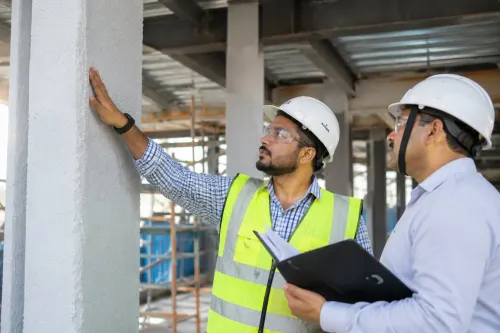
- Insist on certified products and DFT inspection records; a failed audit costs far more than doing it right.
Why choose NEVIQ Infratech for passive fireproofing
The right partner controls cost by getting the specification right the first time. NEVIQ Infratech Pvt. Ltd., established in 2018, provides fire protection, high-performance insulation and advanced surface coating solutions across industries.
- Complete passive fireproofing range: cementitious (including medium-density) fireproofing, solvent-based and water-based intumescent coatings for architectural steel, and hydrocarbon and jet-fire intumescent systems for oil, gas and process plants.
- Design consultancy, not just application: NEVIQ offers passive fireproofing design consultancy, helping clients select the right rating, system and thickness so they neither under-protect nor overspend.
- One partner for fire, insulation and coatings: combining fireproofing, anticorrosive coatings and insulation under one team simplifies compatibility, scheduling and accountability.
- Industrial and commercial experience: from exposed steel in commercial buildings to pipe racks and process structures, NEVIQ understands both cellulosic and hydrocarbon fire scenarios.
- Coatings know-how at the core: a team grounded in coatings technology understands surface preparation, primer compatibility and DFT control, which is where most fireproofing failures begin.
- Pan-India project support: experienced crews and in-house spray equipment for efficient mobilization and application.
- Committed to innovation and sustainability: NEVIQ aims to help the construction industry become more efficient, resilient and environmentally responsible.
Get an accurate fireproofing estimate
The fastest way to an accurate price is a specialist review of your steel schedule, fire rating and site conditions. Contact NEVIQ INFRATECH for a site assessment and a fireproofing proposal tailored to your structure, your code requirements and your budget.
Keywords